Start seeing again
is a revolutionary, patent-pending vision-assistive smart-glasses system created for people living with degenerative retinal diseases and other forms of vision impairment.
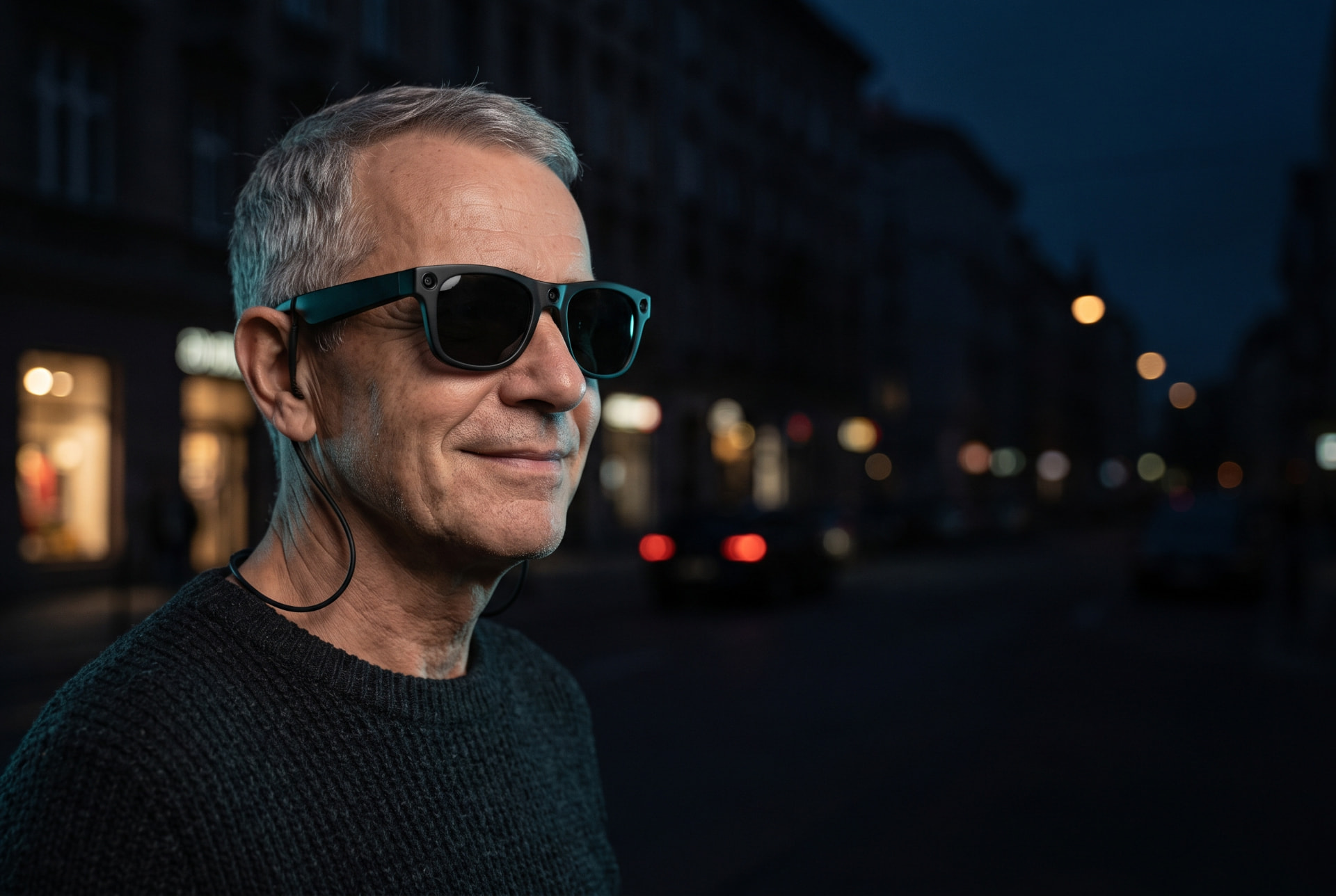
Its unique real-time processing is designed to help people make more of their usable remaining vision, supporting clearer details, reading and screen viewing, daylight and low-light situations, and different field-of-view needs.
Bella voice operation is included at no extra charge for supported functions. Results vary, so an individual hands-on fit check is the only way to explore whether may be useful for you.
Patent pending
A revolutionary product
Built on patent-pending technology
Degenerative retinal diseases can take away detail, contrast and field of view. Each disease affects vision differently, and some cause profound vision loss.
pairs AR glasses with a compact smart device. The cameras capture the world in front of you, the device analyzes and rebuilds the picture in real time, and sends it back to the screens in the glasses, clearer, sharper, higher in contrast and wider.
Every eye is different. Results vary, and an individual hands-on fit check is the only way to explore whether may be useful for you. does not correct or restore vision and is not a substitute for medical advice.
In their words
What people say at their fit check
Individual observations from hands-on fit checks. Results vary from person to person.
“Wow. Without them I see a vague shadow. With them on I could see the presenter's face, his nose, his eyes and his ears.”
Adam K. “I saw my wife for the first time in years.”
Simon G. “I can see my sign language interpreter. I have not seen her in 15 years.”
Dan H.
“I can see the whole room: four people, four chairs, the front door. Without them I only see your board.”
Maria C. “Oh my God, I can see my parents, both of them standing and looking at me. Without the glasses I only see my mother's eye and a bit of her nose.”
Rachel S. “I can see the presenter: face, nose, beard, ears. I can even read the sign behind him. Without them I see a dim silhouette.”
David L.
What becomes possible
Six ways to see. One
Day
Designed for more of the day: a wider view, more color and more light, with strong glare and bright light reduced.
Night
Designed for very little light. One lamp can be enough to see the faces and the room around you, with a much wider view for people whose field of vision has narrowed.
Read
Paper, books and newspapers. Print can become clearer and sharper because the live image is processed.
Computer and kiosk
At a monitor or a bright ordering kiosk, glare is reduced and screens can become sharper and higher in contrast.
Edge
The world drawn as outlines: a black background with bright lines around objects, so shapes and edges stand out clearly.
TV
A picture that can be clearer, more colorful and more focused, with glare reduced, blended for the light in your room.
Results vary from person to person. These are intended uses, not guaranteed outcomes.
Bella is included
Just say it
Bella is the voice assistant, included with at no extra charge. Say what you need and the view follows, across all six viewing modes.
Bella operates supported functions; some connected actions may require internet.
- Switch between six modes
- Supported hands-free controls
- English voice operation
- Connected assistance when available
Speak, and the view follows
Your vision is personal
The only way to know is to try it
Every eye is different, and results vary. That is why starts with a hands-on fit check, not a promise.
Viewing modes and color preference are set by you during your individual fitting. Full detail is on the product page.
A few short questions. We answer personally.
Our story
Built by someone who lives with it
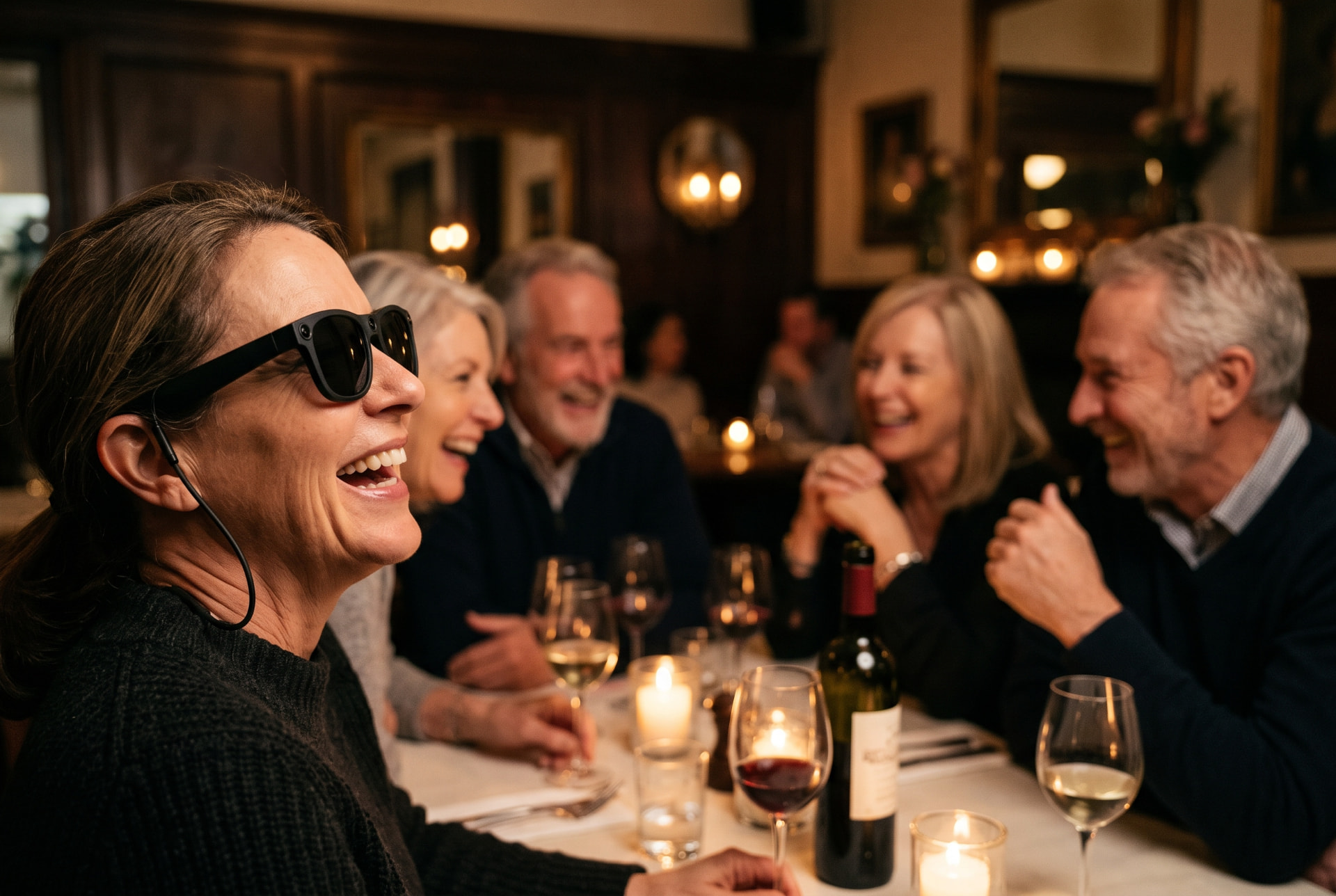
began with personal experience of vision impairment and one practical question: how can technology help people make more of the vision they have?
Read our storyNew possibilities, in every look
A few short questions. We answer personally.
is vision-assistive technology, not a medical device, and results vary from person to person. Patent pending.