Living with RP
Retinitis pigmentosa and assistive technology
Retinitis pigmentosa, often called RP, is a group of inherited retinal diseases that cause retinal degeneration over time. It can affect night vision, peripheral vision and, for some people, central vision. Every person’s experience is different.
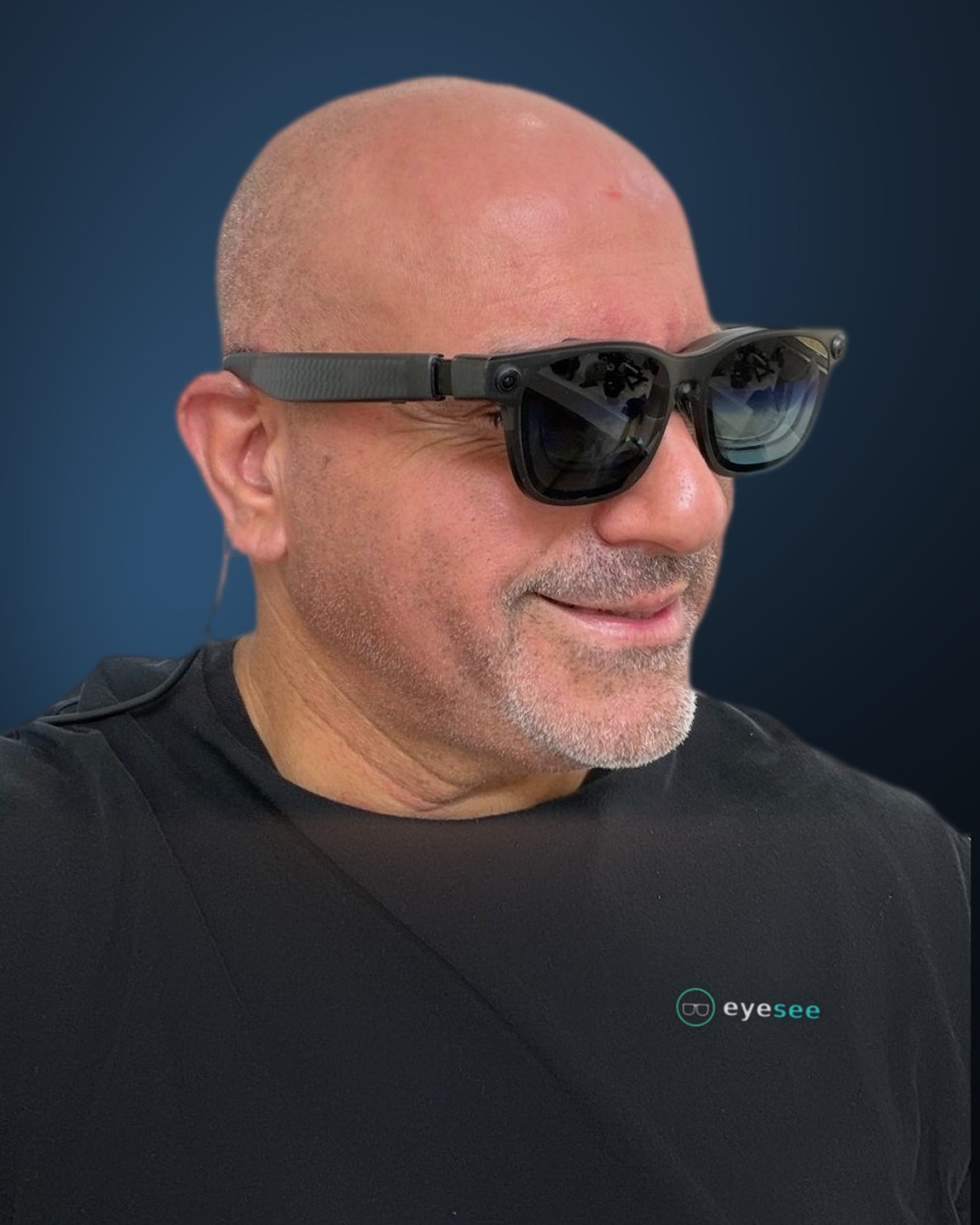
Noam YahavFounder & CEO
Start with the person, not only the diagnosis
Two people with the same diagnosis may experience vision very differently. The most useful support depends on the person’s remaining usable vision, the task, the lighting and the environment. A diagnosis alone cannot predict whether a particular device will be useful.
Different challenges may need different tools
Night blindness and low light
Difficulty seeing in low light, often called night blindness, is one of the earliest changes many people notice. Some look for ways to use their remaining vision in dim or changing light.
Reduced peripheral vision
A reduced field of view can make it difficult to take in more of a scene at one time.
Faces and details
Details, expressions, objects and signs may become difficult to distinguish.
Reading and screens
Print, computer screens, kiosks and television can present different contrast, glare and detail challenges.
Different kinds of assistive support
Support may include vision rehabilitation, lighting and contrast changes, optical or electronic magnification, screen readers, audio-description technology and live-image processing glasses. An eye-care or low-vision professional can help someone explore the broader range of available support.
Where fits
is a patent-pending vision-assistive smart-glasses system that processes a live view in real time for different needs, including daylight, low light, reading, screens and television. It was created by a founder who lives with retinitis pigmentosa. is not a medical device or treatment and does not correct or restore vision. Results vary.
The honest way to know is to try
Usefulness cannot be predicted from a diagnosis. During an individual hands-on fit check, the person can explore different viewing options and settings using their own eyes and their own visual tasks.
Contact us about a fit checkQuestions about RP and assistive technology
Are there special smart glasses for retinitis pigmentosa?
There are different kinds of vision-assistive glasses. Some provide magnification or a processed live image, while others describe text, objects or scenes through audio. No device can be assumed to work for someone because of an RP diagnosis. Individual assessment and hands-on testing matter.
Can smart glasses restore vision lost to RP?
No. Vision-assistive smart glasses do not restore or cure vision loss. They may help a person explore different ways of using remaining usable vision or receiving visual information. Results vary.
Can ’s usefulness be predicted from my diagnosis?
No. Retinitis pigmentosa affects people differently, and diagnosis alone does not predict whether will be useful. The current qualification method is an individual hands-on fit check.
Can be relied on for driving or navigation?
No. is not a mobility, navigation or safety device. Do not rely on it for driving, walking in traffic or any activity where an altered view could create danger.
Trusted health-information sources
For general medical information about retinitis pigmentosa:
- National Eye Institute, Retinitis Pigmentosa (opens in a new tab)
- Foundation Fighting Blindness, What Is Retinitis Pigmentosa? (opens in a new tab)
This page provides general educational information and does not provide medical advice. is vision-assistive technology, not a medical device or treatment, and does not replace care from an eye-care professional.